2 hr
Nile River Dinner Cruise with Live Shows
- Entry ticket
- Mobile voucher
- Valid same day
- Free cancellation
Nile River Cruises — Multi-Day Voyages & Dahabiya Charters
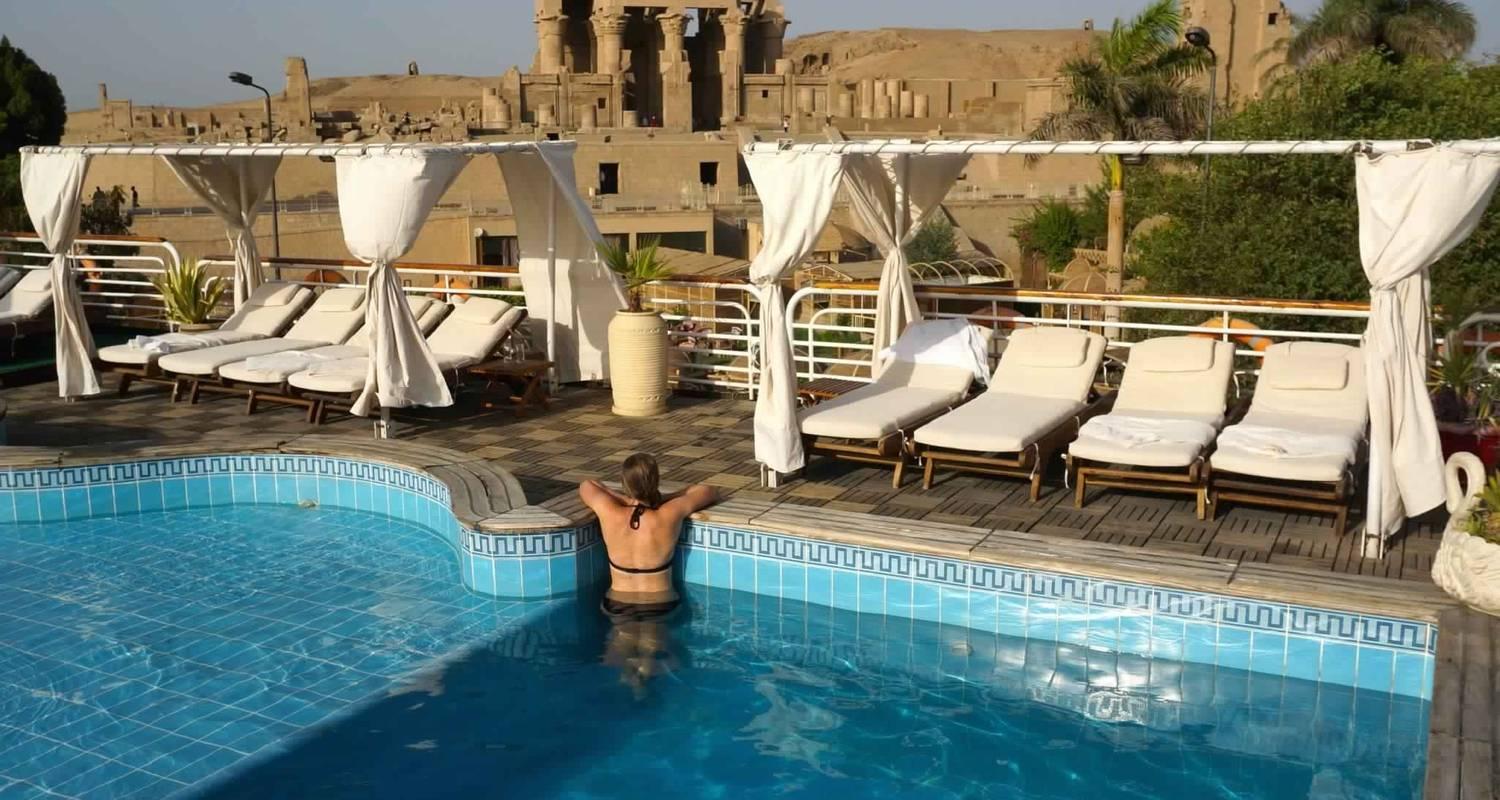
Sail past temple ruins and desert cliffs, where pharaohs once commanded.
Compare fares, pick the fit — all bookings are mobile-voucher and eligible for free cancellation where shown.
2 hr
2 hr
96 hr
| Experience | Duration | Rating | Pickup | Guide | Small group | Free cancel. | Price | |
|---|---|---|---|---|---|---|---|---|
|
Standard Entry
Most popular
Nile River Dinner Cruise with Live Shows
|
2 hr | ★ 4.2 | ✓ | — | — | ✓ | €37 | Book → |
|
Luxury / Private
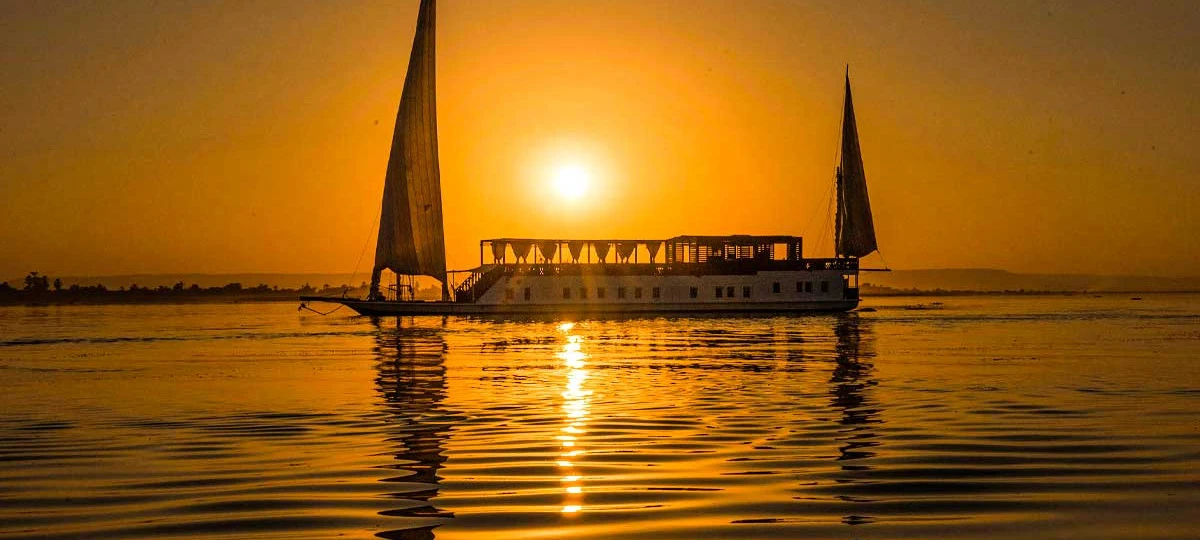
Private Felucca Sail on the Nile River
|
2 hr | ★ 4.4 | ✓ | ✓ | ✓ | ✓ | €13 | Book → |
|
Guided Experience
4-Day Nile River Cruise: Aswan to Luxor
|
96 hr | ★ 4.3 | ✓ | ✓ | ✓ | ✓ | €397 | Book → |
They complement each other; most visitors who do both call Dahabiya sailing the more intimate, while nile river cruises tours provide a more social atmosphere. This comparison helps you choose between classic river vessels and private wind-powered boats for your upcoming journey.
|
Top pick Nile River Cruises |
Dahabiya Sailing | |
|---|---|---|
| Vessel Size | 100 to 200 passengers | 6 to 20 passengers |
| Docking Accessibility | Large commercial ports | Small riverside banks |
| Privacy Level | Shared public spaces | High cabin privacy |
| Onboard Amenities | Pool, gym, sundeck | Limited lounge areas |
| Itinerary Flexibility | Fixed scheduled stops | Customizable small group routes |
| Price Range | 150 to 500 USD per day | 300 to 800 USD per day |
| See tickets & prices |
Verdict: Select the large ship for expansive onboard nile river cruises tickets, or choose a Dahabiya for a quiet, bespoke nile river cruises tour.
Hand-picked experiences loved by thousands of travelers
2 hours
Free Cancellation
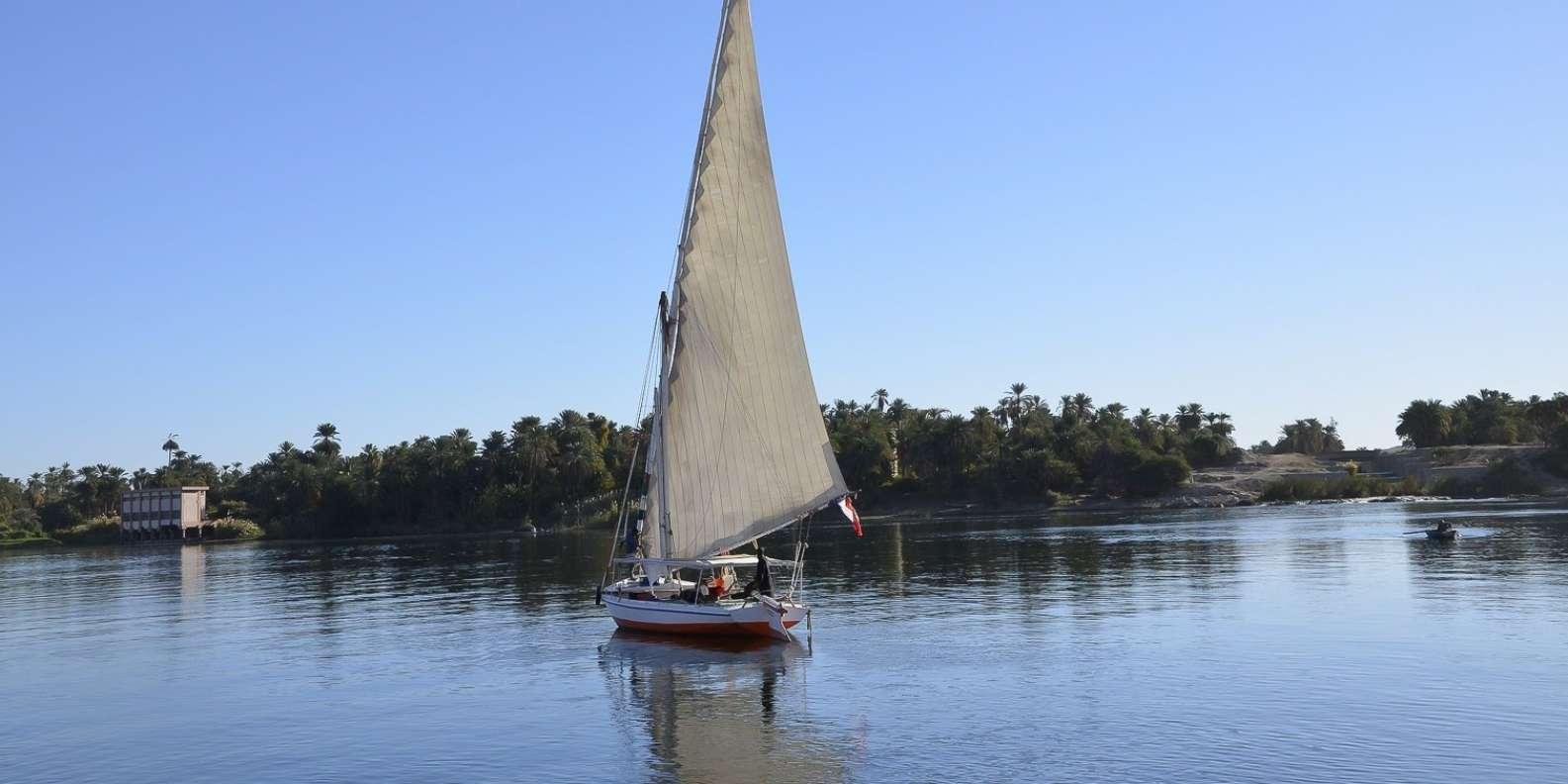
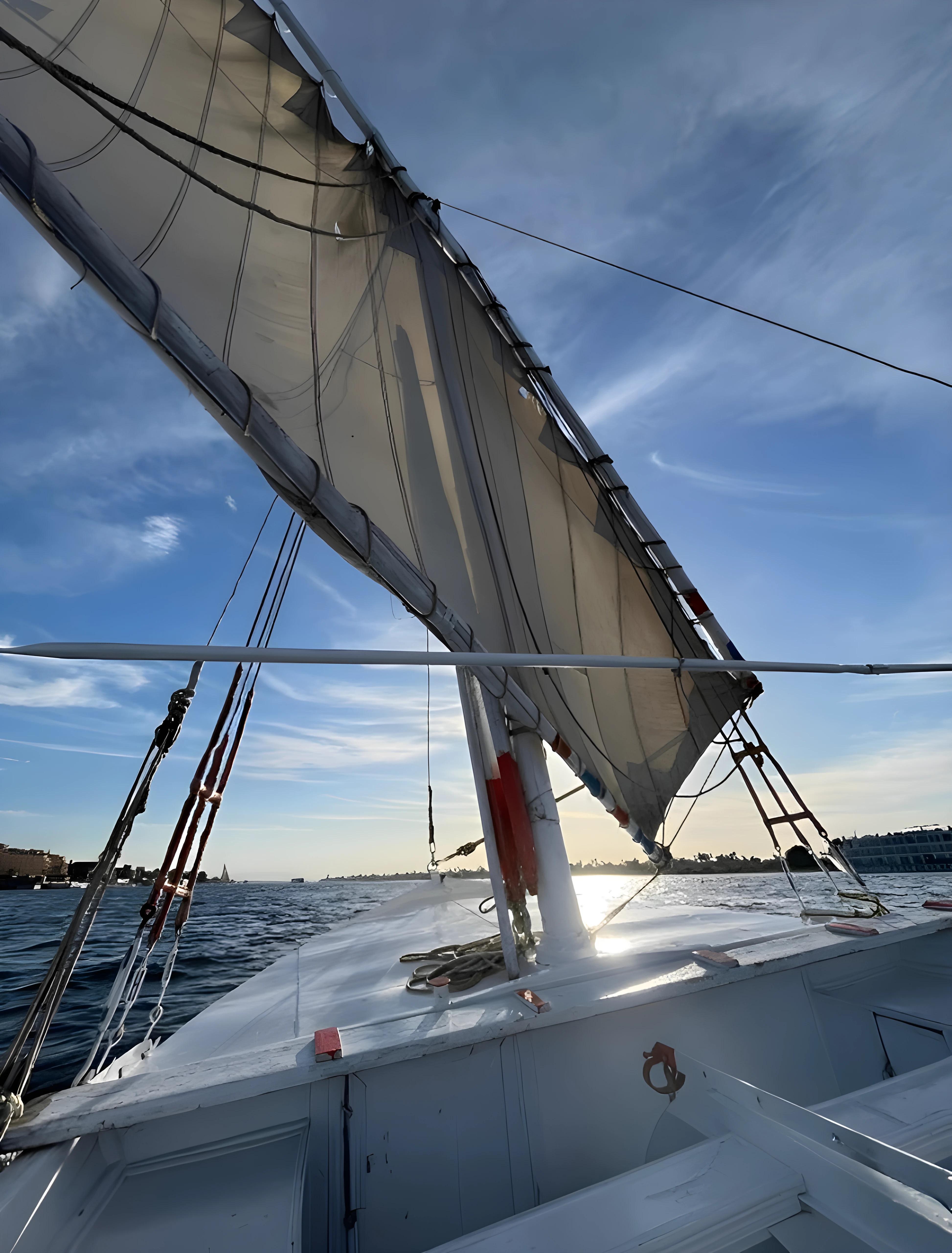
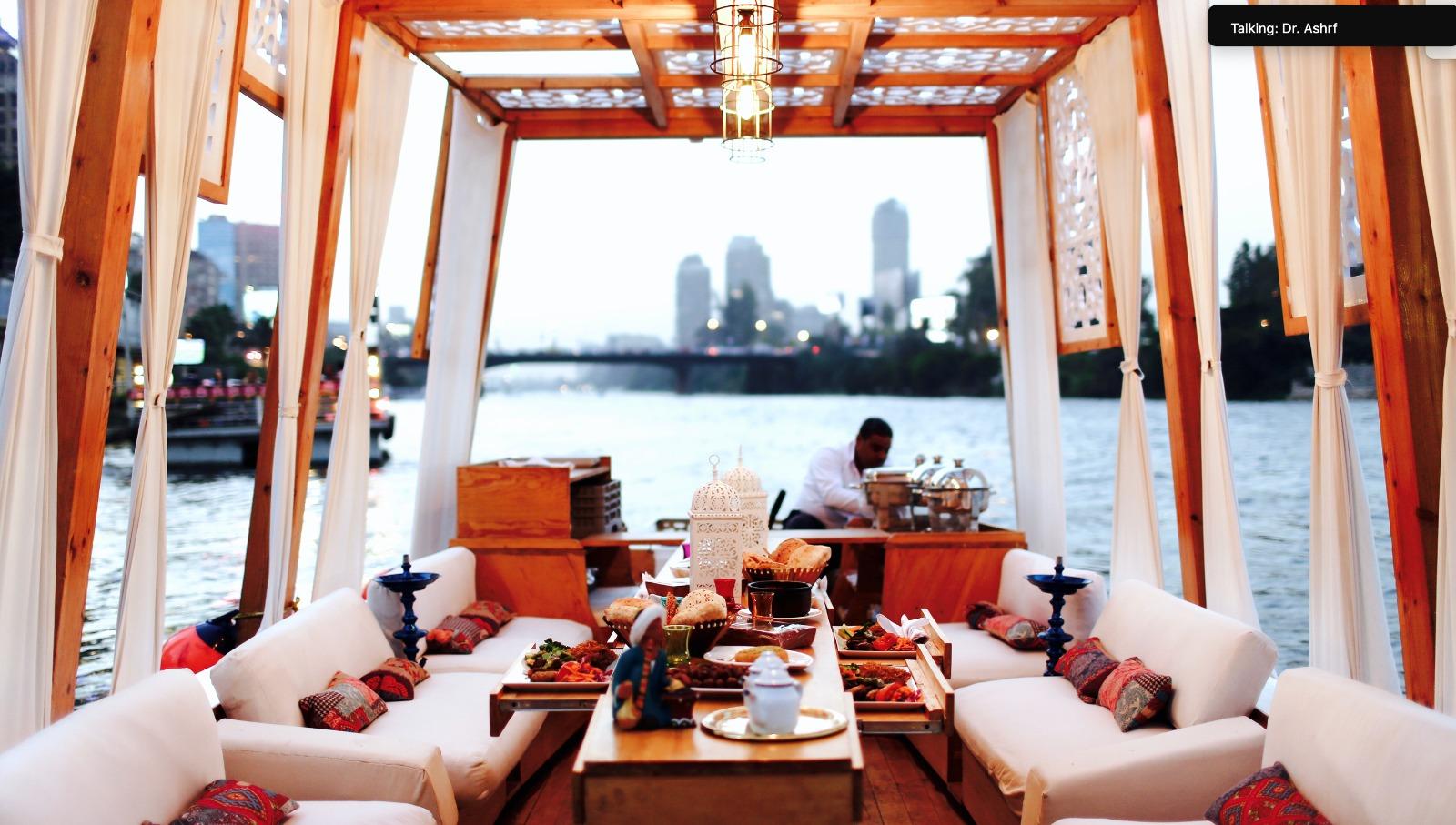
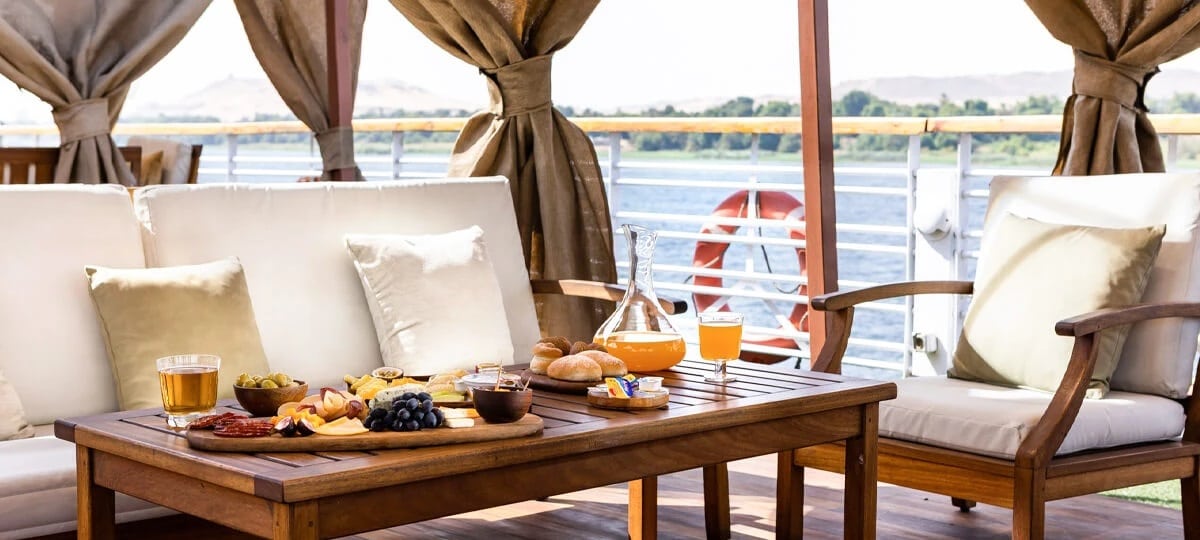
Glide along the Nile at dusk aboard a traditional wooden sailboat, sipping tea as golden light paints the water.
2 hours
Free Cancellation
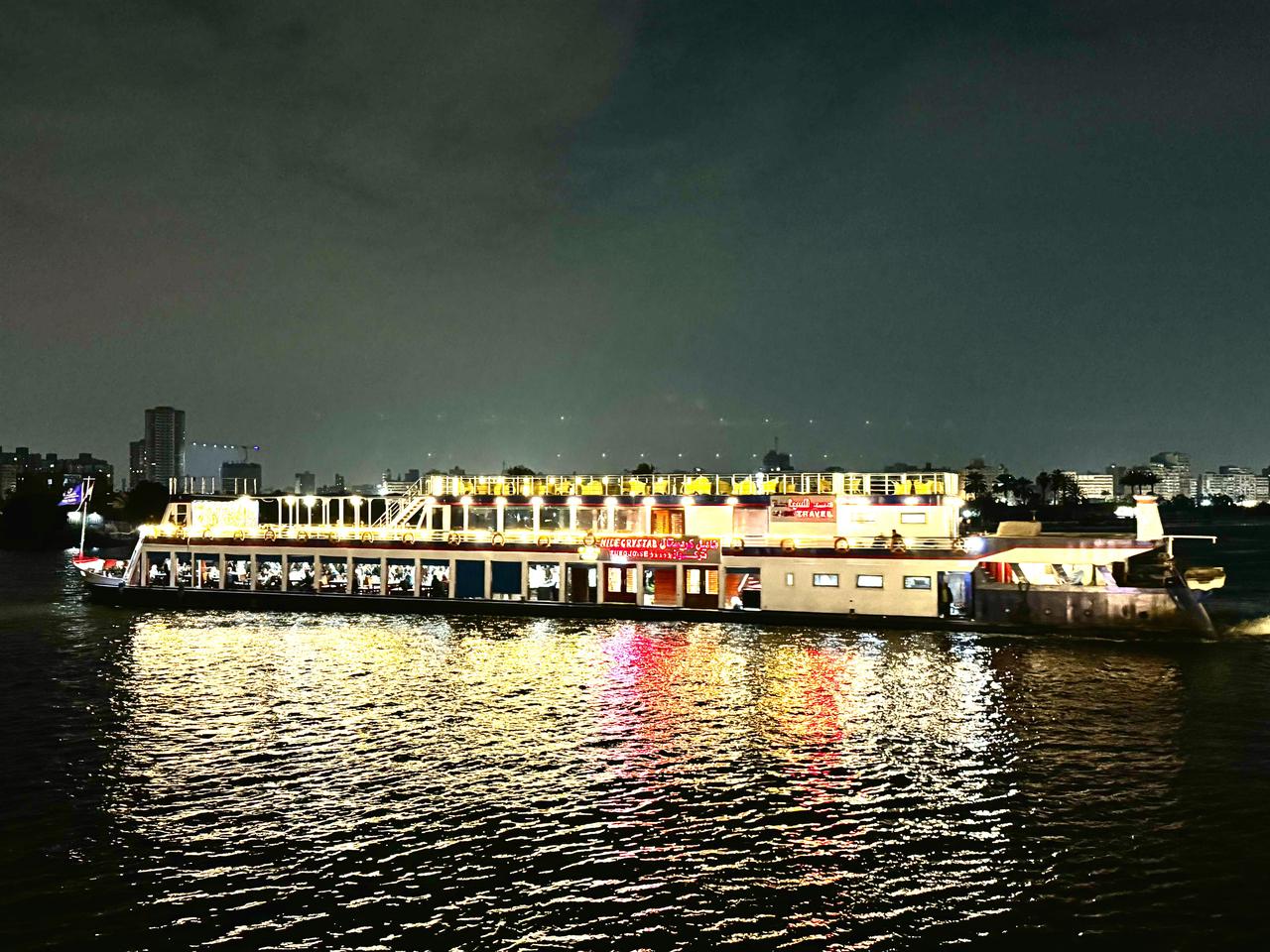
Two-hour evening voyage combining buffet dining, traditional performances, and illuminated Cairo views
2 hours
Free Cancellation
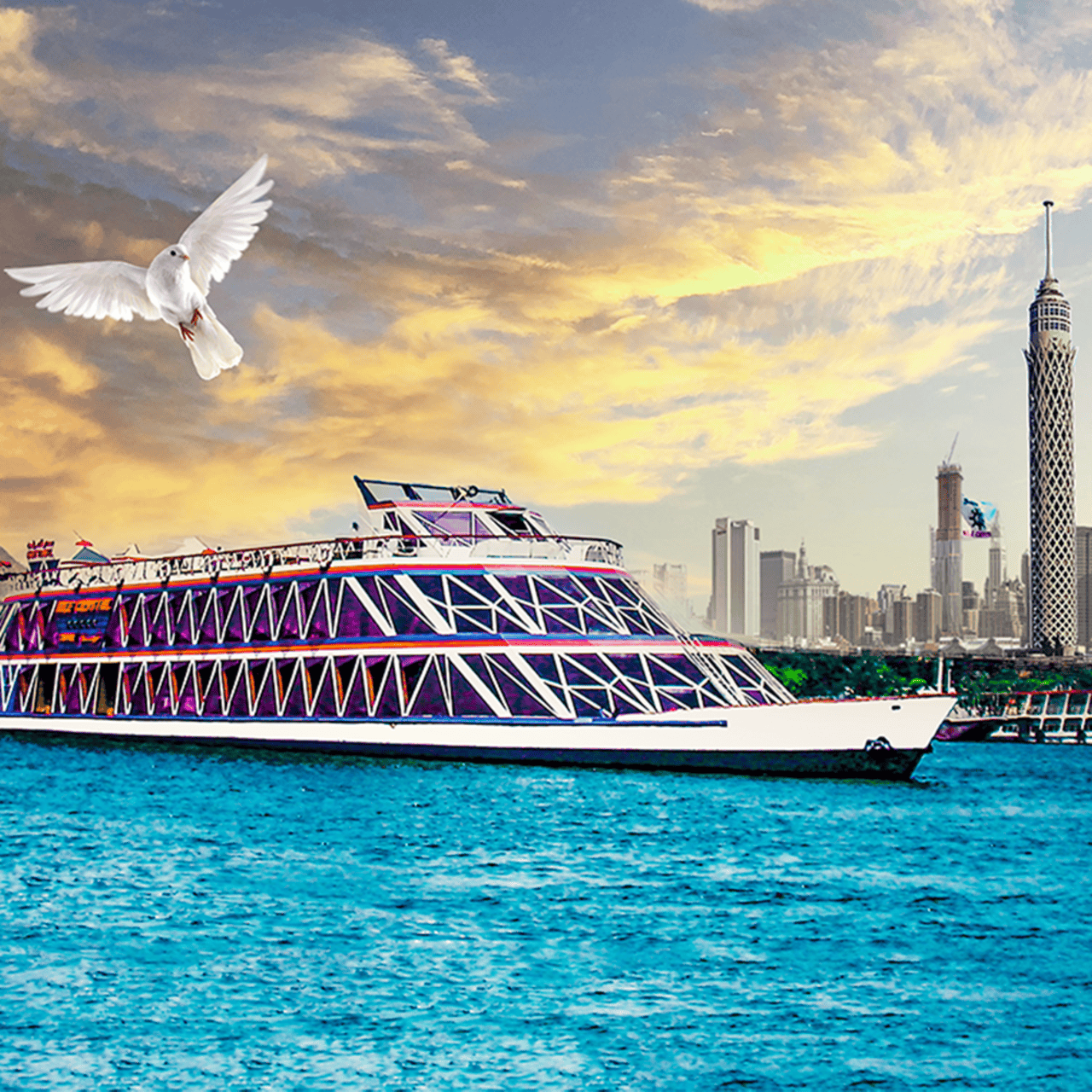
Glide along Cairo's waterfront with buffet dining, belly dancing, and traditional Tanoura performances
4 days
Free Cancellation
Sail the Nile from Aswan to Luxor, exploring ancient temples and floating over history at sunrise.
2 hours
Free Cancellation
Drift along the Nile aboard your own traditional boat with dinner, drinks, and entertainment included
2 hours
Free Cancellation
Glide along the Nile at dusk with fine dining, captivating cultural performances, and Cairo's skyline aglow.
3 days
Free Cancellation
Sail the Nile over three days, discovering ancient temples and royal tombs with expert guides
4 days
Free Cancellation
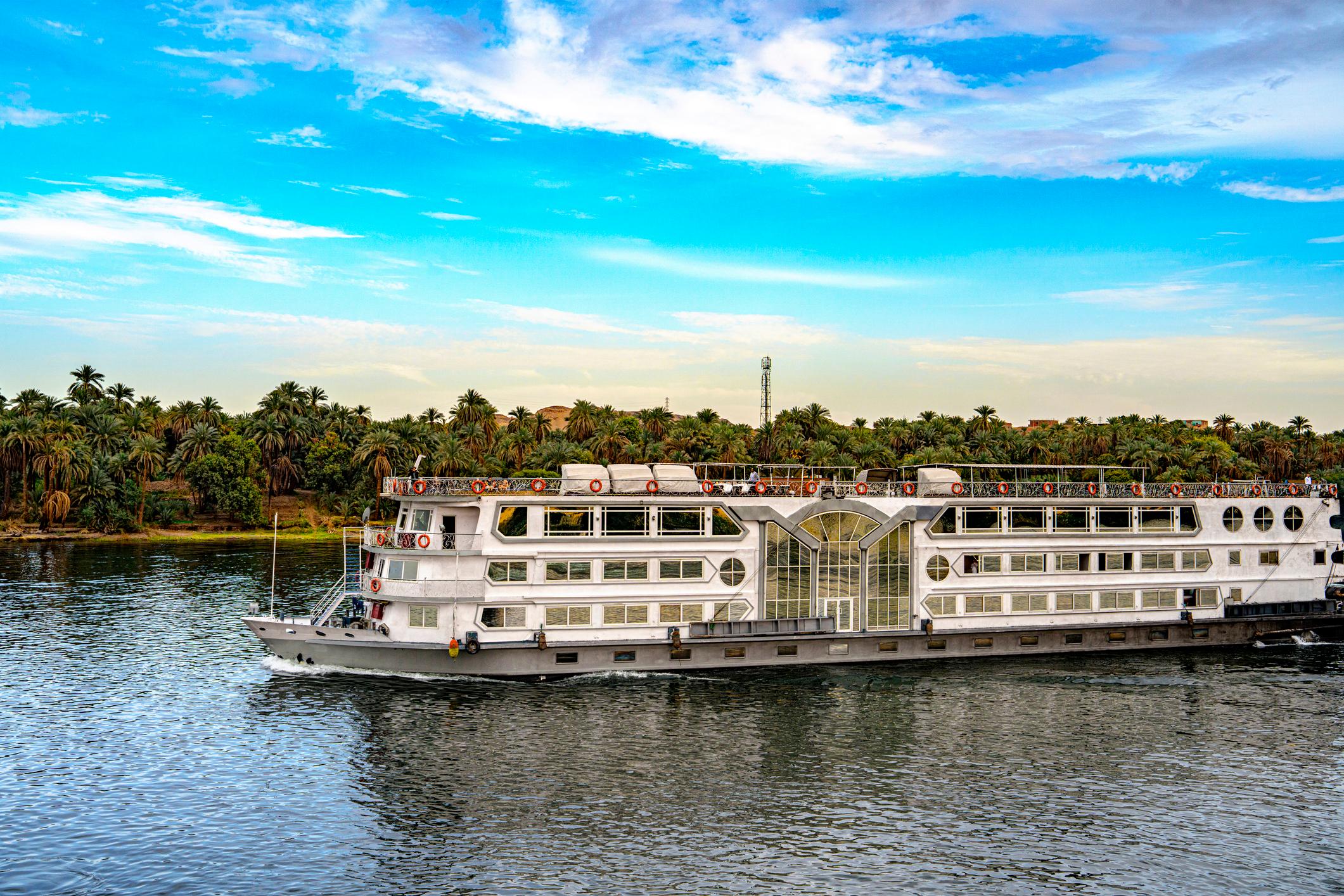
Glide down the Nile aboard a luxury cruise, explore ancient wonders, and soar over Luxor at sunrise.
Embark from the designated pier
Sail past iconic monuments and cityscapes
Disembarkation at the original pier
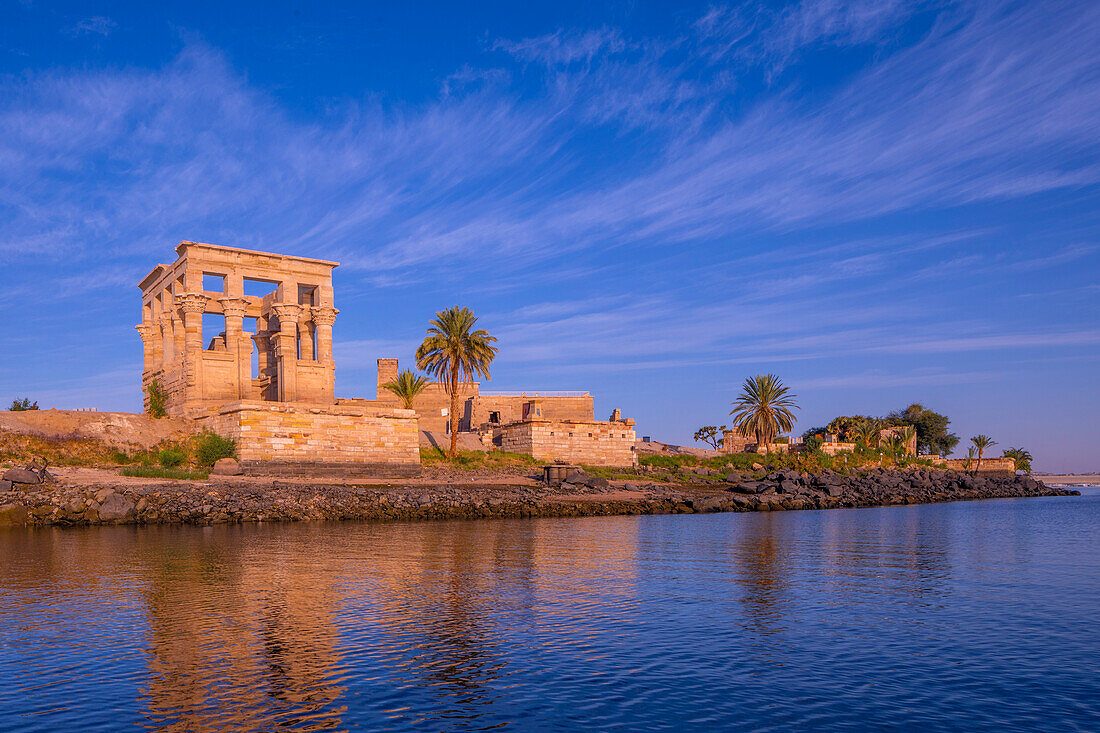
Located on an island, this temple is reached by boat and remains a primary sight on many routes.
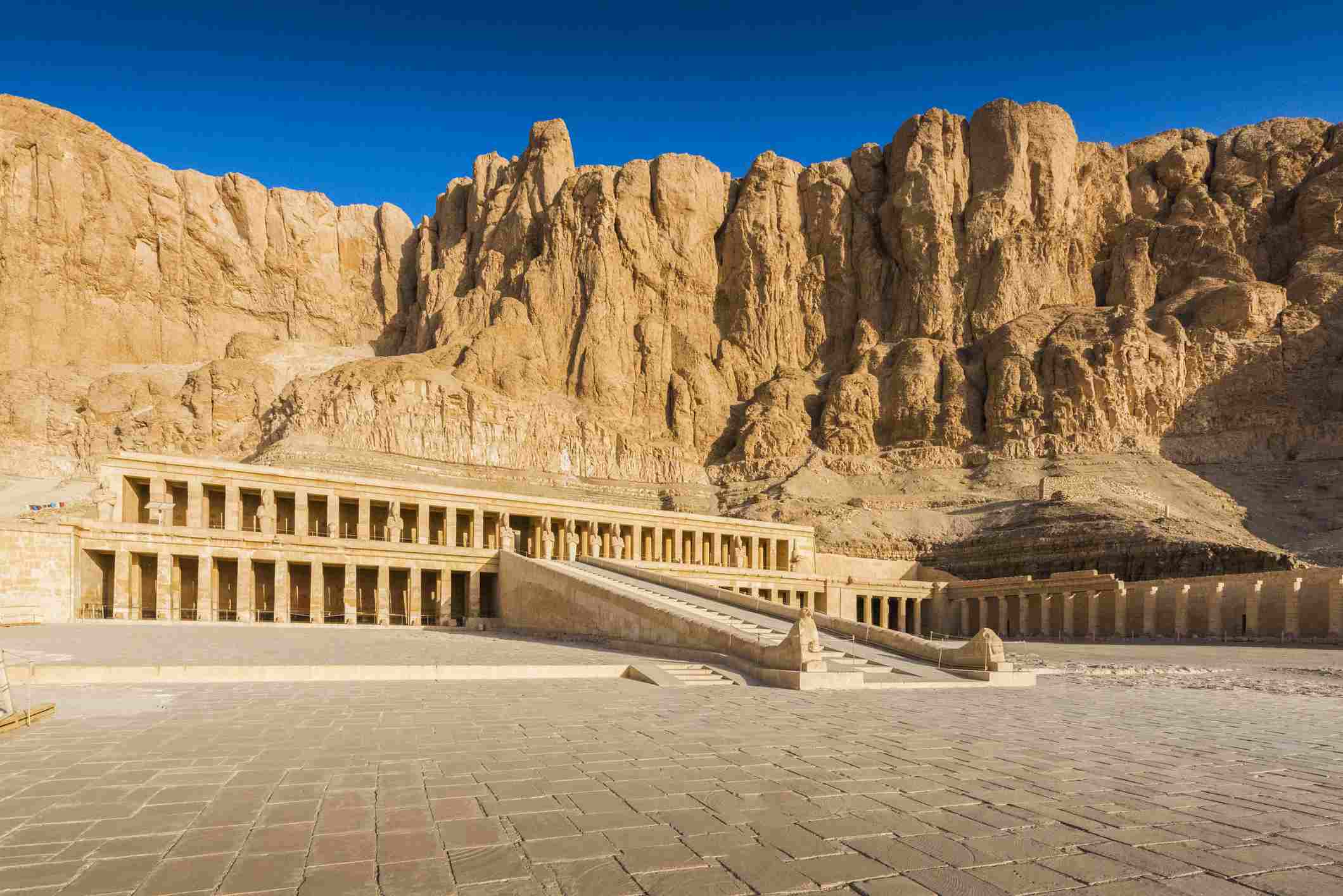
The final resting place of pharaohs, featuring intricate wall paintings and deep rock-cut tombs.
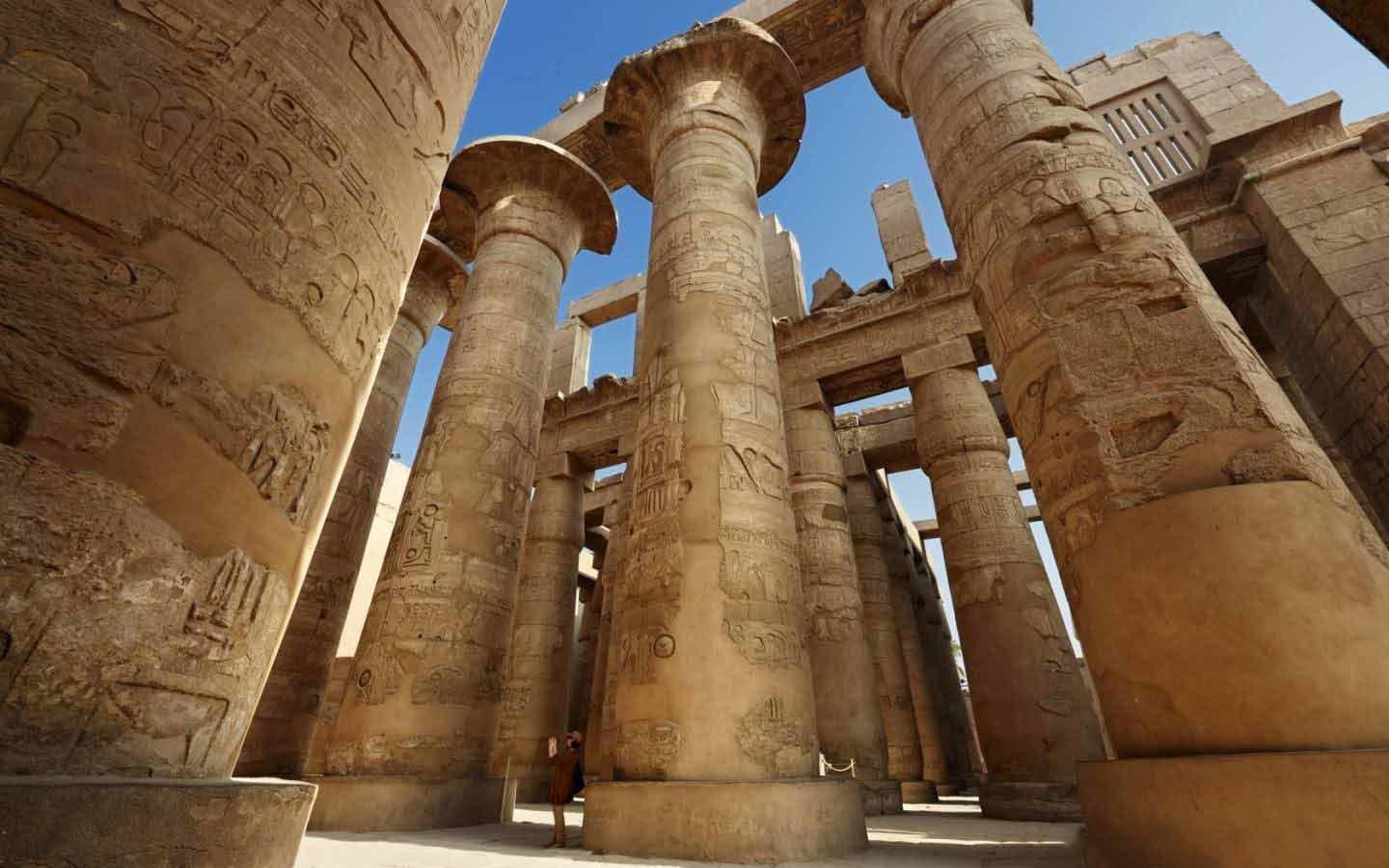
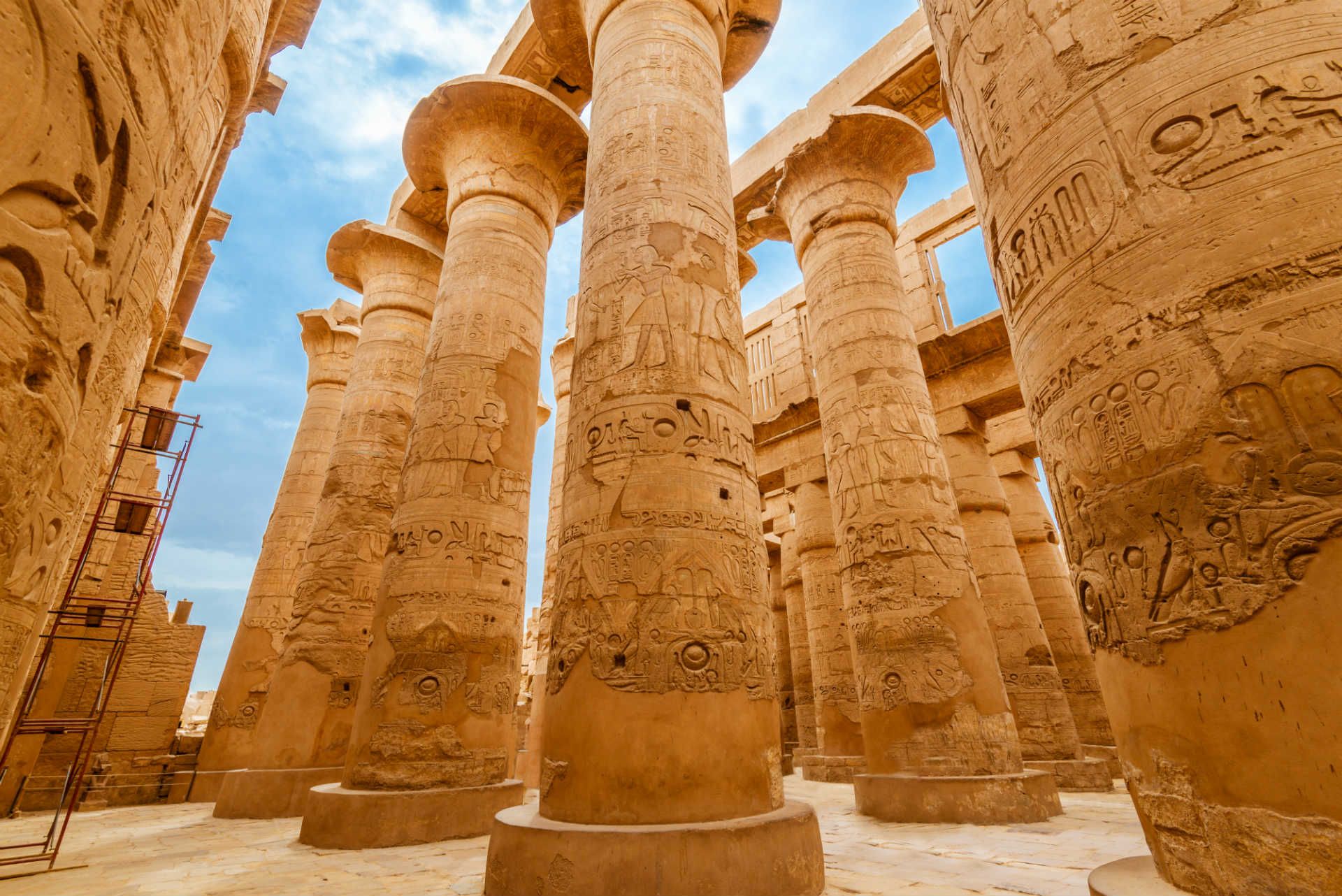
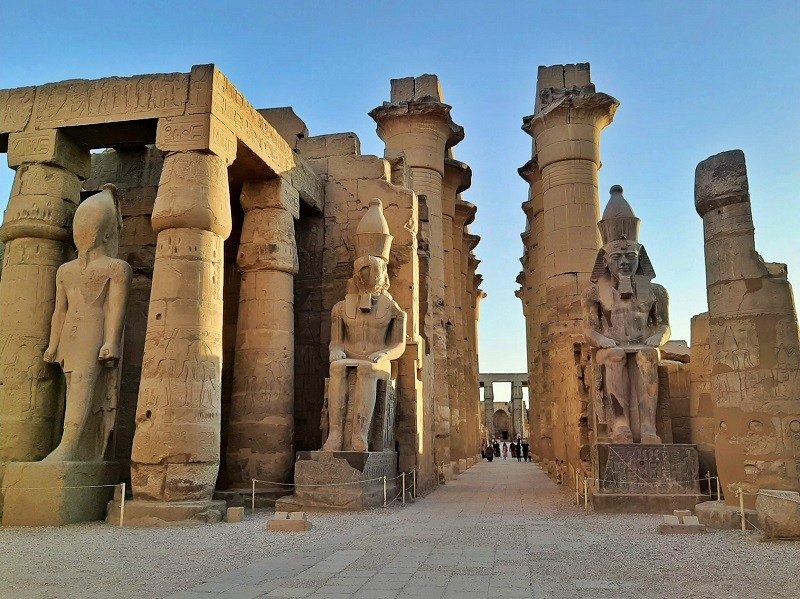
This vast site contains the hypostyle hall with 134 massive columns.
Situated in the heart of the city, this site is beautifully illuminated at night.
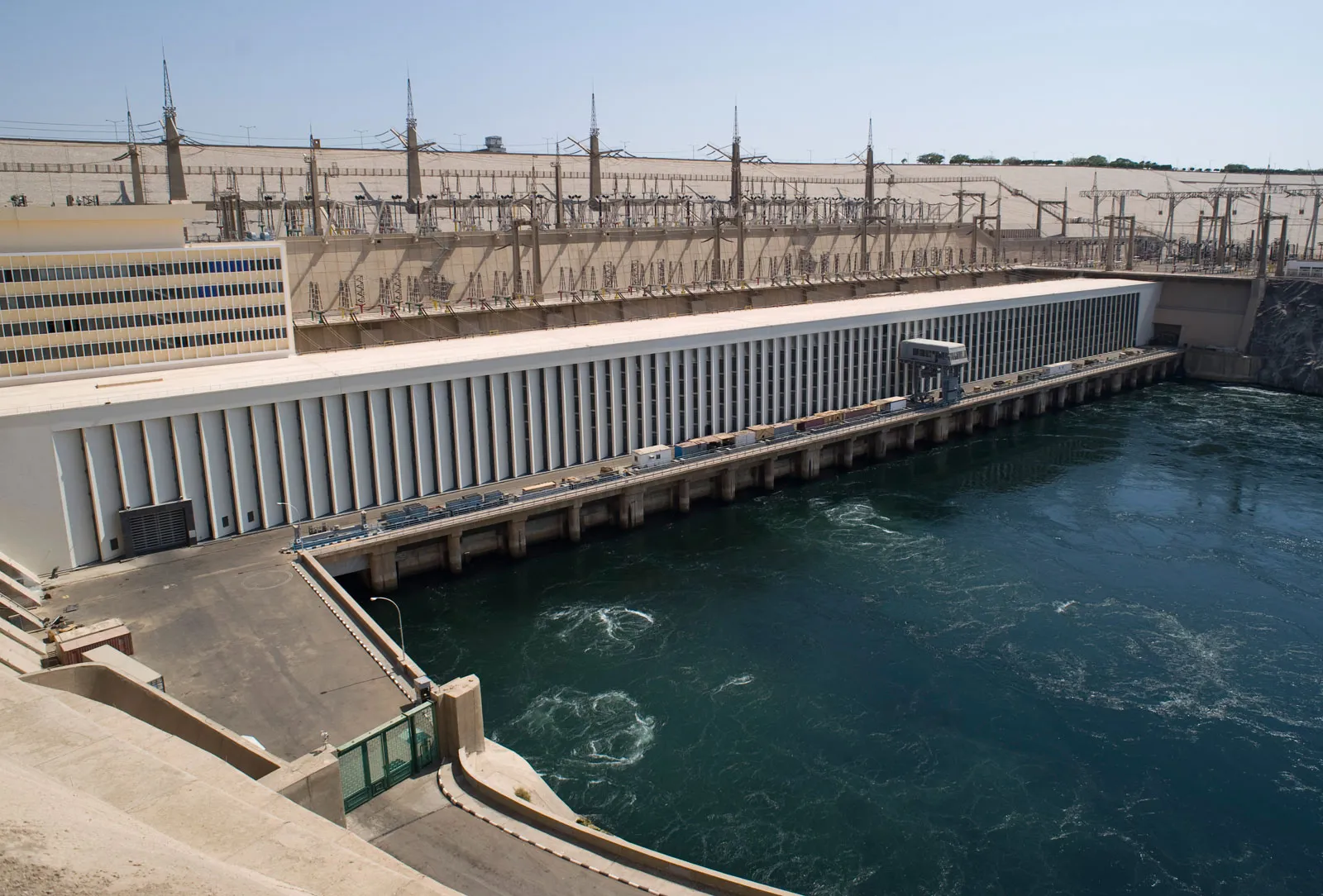
A modern engineering feat that controls the river flow and powers local regions.
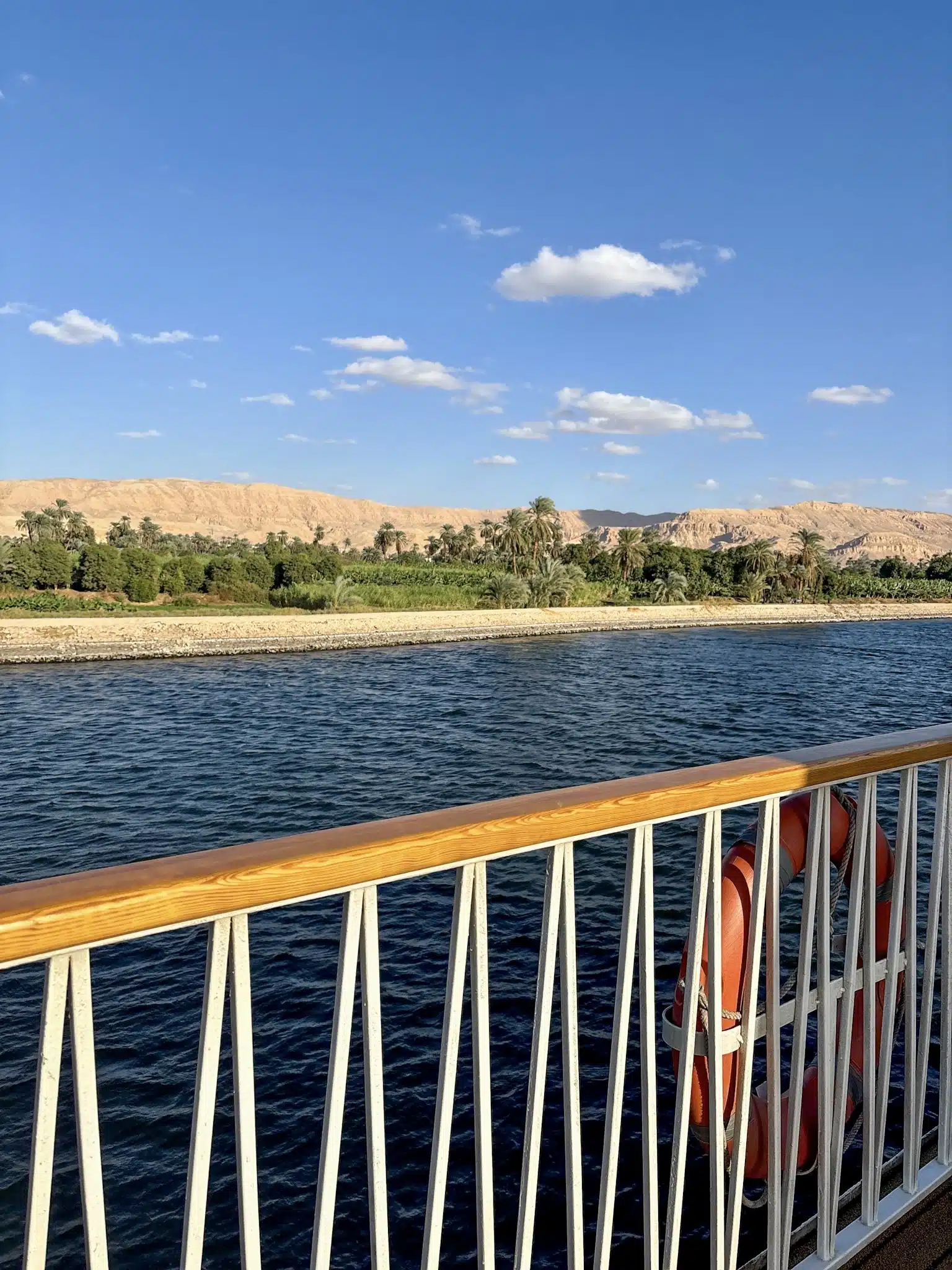
You board at Luxor's eastern dock as porters hoist luggage onto the sundeck, and the vessel slips into the current just after breakfast. The city's concrete sprawl recedes within twenty minutes, replaced by sugarcane fields and mud-brick villages where children wave from the banks.
Your first stop arrives mid-morning at Karnak, where you disembark via gangway and walk through the Avenue of Sphinxes under acacia shade.
By afternoon you are underway again, the engine's hum mixing with the call to prayer from riverside mosques. You claim a deck chair as the sun lowers, turning the western cliffs amber, and watch feluccas tack across your wake. Dinner is served as you moor overnight near Edfu, the temple floodlit beyond the promenade. The next dawn you rise early for the Valley of the Kings, boarding a coach that climbs into the Theban hills while the river mist still clings to the water.
Nile river cruises tour schedules allow two to three temple visits per day, each separated by several hours of sailing. You learn to time your showers with the engine's hum, which signals departure and the return of water pressure. On the final morning you wake docked at Aswan, the granite islands of the First Cataract visible from your cabin window, and disembark with a mental catalogue of column capitals and hieroglyphic cartouches you will spend months deciphering in photographs.
All the details about your upcoming adventure in one place
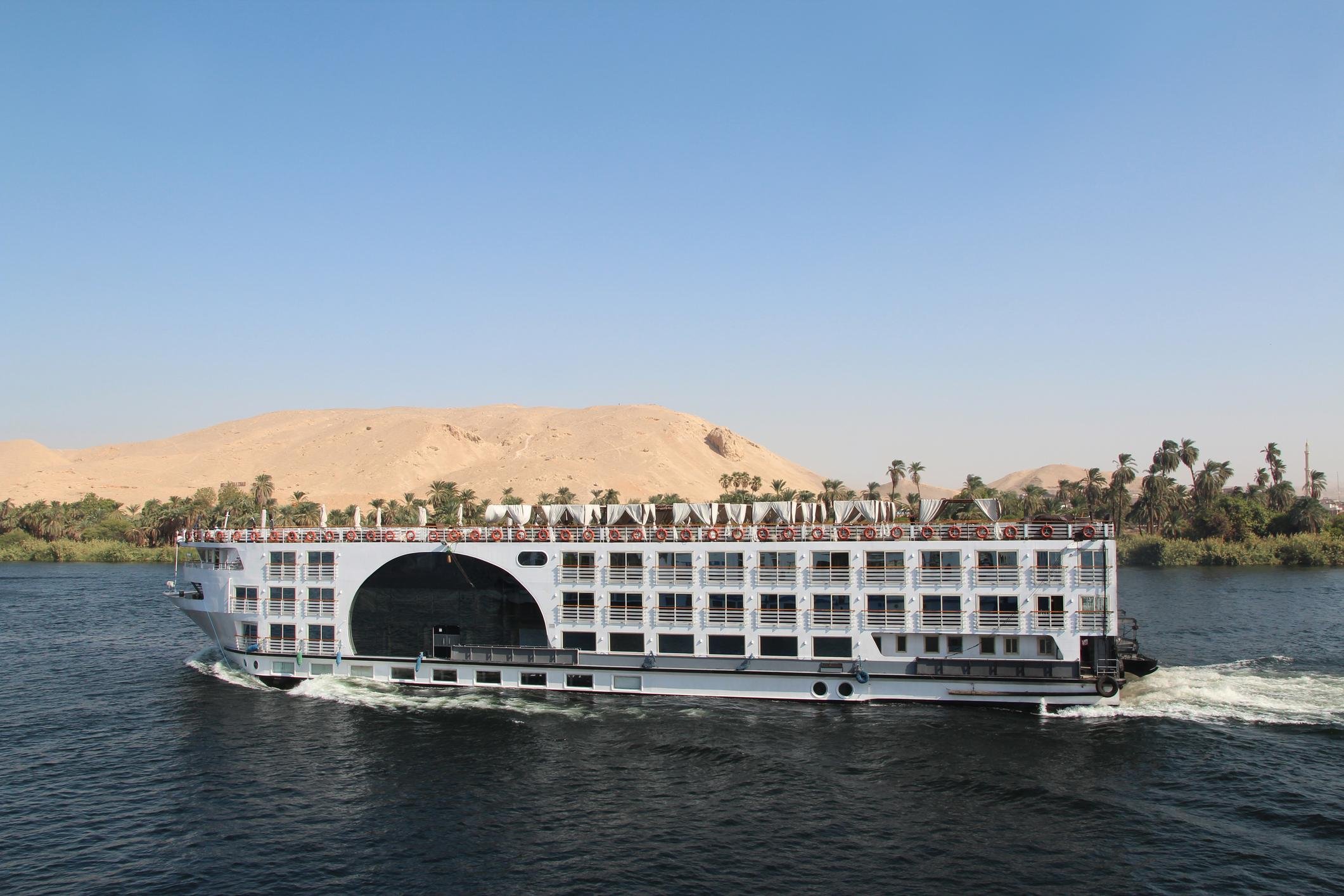
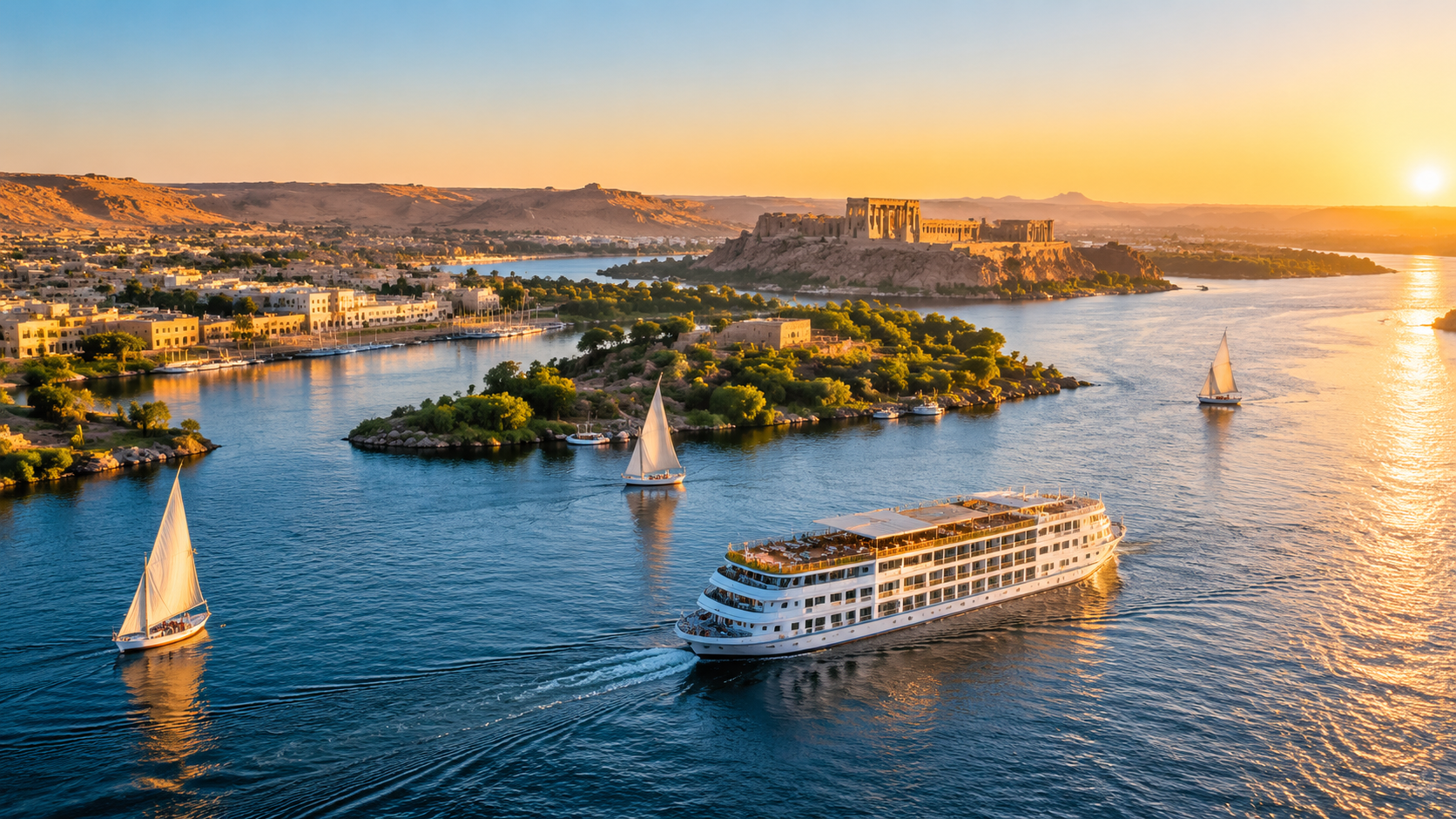
Nile river cruises sail between Luxor and Aswan, stopping at temples including Edfu, Kom Ombo, and Philae along a 200-kilometer route. Most nile river cruises tours operate on 3- to 5-day itineraries with onboard accommodation, meals, and guided shore excursions to archaeological sites. Vessels range from traditional dahabiya sailboats to larger cruise ships with sun decks and evening entertainment.
The Nile sustained ancient Egypt for five thousand years, and today its current carries travelers between the greatest concentration of pharaonic monuments on earth.
More than sixty temples, tombs, and administrative complexes line the 200-kilometer corridor between Luxor and Aswan, a density unmatched anywhere in the Mediterranean basin. The riverbanks remain largely agricultural, offering a view of rural Egyptian life unchanged in its rhythms since Herodotus described the annual inundation.
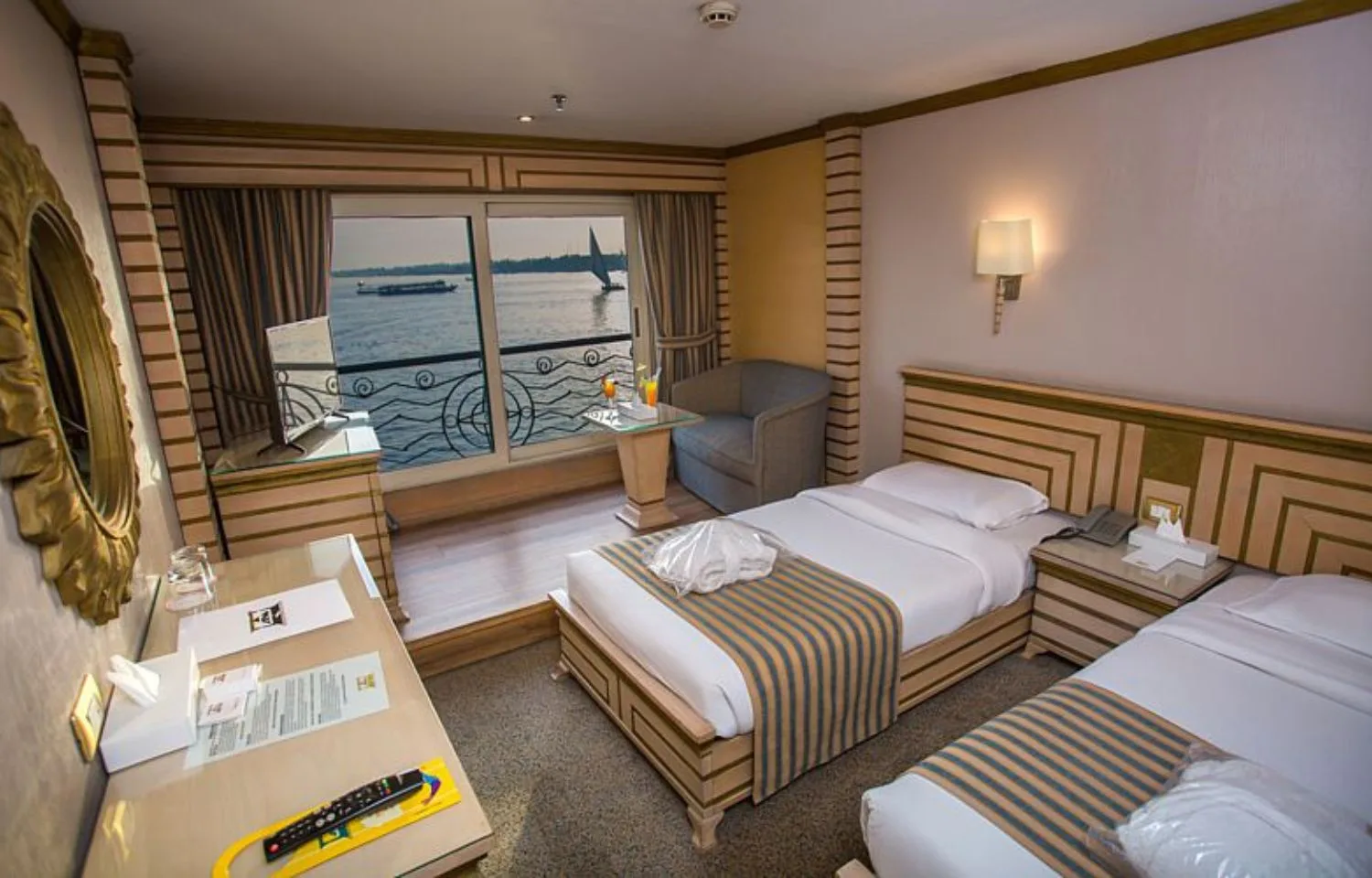
Modern Nile river cruises egypt trace routes perfected by Victorian-era steamers, which brought European antiquarians to sites Thomas Cook first commercialized in the 1870s. The cruise industry matured after the Aswan High Dam stabilized water levels in 1970, enabling year-round navigation and predictable itineraries. Today's fleet ranges from 300-passenger vessels with lecture halls and spas to traditional dahabiyas — two-masted wooden sailboats carrying twelve guests and powered by wind alone. Luxury operators install Egyptologists as onboard guides, while budget lines dock passengers near temples for independent exploration.
The Karnak Temple complex, the Valley of the Kings, Edfu's Ptolemaic sanctuary, and the twin temples of Abu Simbel anchor most multi-day itineraries. Northbound voyages from Aswan allow morning arrivals at Kom Ombo and Esna, when golden light rakes across hypostyle columns. Southbound routes from Luxor prioritize afternoon temple visits, after the heat softens and coach groups depart. Feluccas — single-sailed skiffs — handle shorter day trips around Elephantine Island and the Tombs of the Nobles, their shallow draft permitting access to irrigation canals and fishing villages motorized craft cannot reach.
Cabin availability for nile river cruises 2027 opens twelve months ahead, with early booking securing lower-deck suites featuring floor-to-ceiling Nile views. High season runs October through April, when daytime temperatures permit comfortable deck time and temple exploration. August departures remain sparse due to heat, though discounted rates attract budget-conscious travelers willing to navigate midday shade. The river itself remains free to access along public embankments, where local ferries shuttle foot passengers between east and west banks for minimal fares.

More than sixty temples line the 200-kilometer corridor between Luxor and Aswan, a density unmatched anywhere in the Mediterranean basin.
Smart casual attire is generally expected for evening nile river cruises tours. Modest clothing is recommended when visiting local sites near the riverbanks.
Most operators allow small day bags on board, but larger luggage may be restricted due to limited cabin space. Security checks are standard at major cruise terminals.
Personal photography is permitted, though professional equipment or drones may require special permission. Respect local customs when capturing images of the scenery.
Family-friendly cabins are available on many ships. Ensure young children remain supervised on decks during nile river cruises.
Modern ships frequently provide ramp access, but older traditional boats may have steep steps. Contact your specific nile river cruises operator regarding individual ship features.
Most packages include full-board dining, featuring international and local Egyptian cuisine. External food is typically restricted on larger vessels.
Opening Hours
08:00–22:30
Address
Nile River, Egypt
Accessibility
Varies by vessel type
Best Window
08:00–22:00
Navigation
Riverside docks
Taxi · Varies · Budget mid-range
The most direct method to reach riverside docks from city centers.
Public transport · 30-60m · Low cost
Metro lines serve major hubs near the river.
Operators typically require notice 48 to 72 hours prior to departure for full refunds. Fees for nile river cruises vary by company, though accessing the river bank remains at 0 USD.
Recommended time
3 to 7 days
Planning nile river cruises requires balancing time spent on the water with shore excursions to ancient temples. These nile river cruises tours typically span several days, allowing for a steady pace between historical sightseeing and relaxing on the deck. If you are looking to secure nile river cruises tickets, ensure your itinerary accounts for both navigation and guided land exploration. Most travelers find that longer durations provide a more relaxed experience while visiting iconic Egypt landmarks away from the midday heat.
Crowd levels through the day
Weather · crowds · average price — dots go green to amber to red as each metric rises.
Mild temperatures make this period ideal for outdoor sightseeing and deck activities. These months see peak demand for nile river cruises tickets.
High temperatures occur, but sailing remains popular with travelers seeking early morning river breezes. Off-peak pricing is often found during these months.
Reserve your nile river cruises tour at least three months in advance during peak season. This secures preferred cabin locations.
Carry bottled water during shore excursions in the heat. Drink only sealed, purified water.
The tradition of sailing the Nile predates recorded history, with reed boats appearing in Egyptian rock art circa 4000 BCE. By the time of the Old Kingdom, wooden vessels transported limestone blocks from Tura quarries to Giza, establishing the river as Egypt's primary artery. Ancient Egyptians built sophisticated galleys powered by oarsmen and square sails, while Cleopatra's royal barge—described by Plutarch as gilded and draped in purple—set a standard for luxury travel that would echo millennia later. Modern Nile river cruises began in 1869 when Thomas Cook chartered a steamship to carry British tourists from Cairo to Aswan, coinciding with the Suez Canal opening. Cook's fleet expanded to eight paddle-steamers by 1880, introducing fixed itineraries that included temple stops at Karnak and Luxor. The SS Sudan, launched in 1885, became the template for luxury river vessels—polished mahogany cabins, observation decks, and formal dining—serving passengers like Agatha Christie, who drafted Death on the Nile aboard a sister ship in 1933. These Victorian-era steamers dominated until the 1950s, when Egypt's nationalization policies disrupted foreign operators. The construction of the Aswan High Dam between 1960 and 1970 transformed navigation by stabilizing water levels year-round, enabling predictable schedules for the first modern diesel-powered cruise ships. The 1970s saw Egyptian and European companies launch purpose-built vessels with air-conditioned suites and swimming pools, shifting the industry from colonial transport to mass tourism. Political instability in the 1990s and the 2011 revolution caused sharp declines, but recovery came through upgraded fleets—many now offering spa facilities, panoramic lounges, and onboard Egyptologists. Contemporary nile river cruises tours operate roughly 300 vessels between Luxor and Aswan, a three-to-seven-day voyage that retraces the ancient route once traveled by pharaohs and feluccas alike. The river's role as Egypt's historical highway endures, now serving travelers seeking echoes of antiquity rather than transporting grain or soldiers.
Reed boats depicted in Nile Valley rock art, marking earliest evidence of river navigation
Old Kingdom Egyptians use wooden cargo vessels to transport Giza pyramid construction materials
Cleopatra's gilded royal barge sets luxury standard on the Nile, later documented by Plutarch
Thomas Cook charters first tourist steamship from Cairo to Aswan, founding modern nile river cruises
SS Sudan launches, establishing Victorian luxury template with mahogany cabins and observation decks
Agatha Christie drafts Death on the Nile aboard a Nile steamer, immortalizing the era in popular culture
Aswan High Dam construction stabilizes water levels, enabling year-round cruise schedules
Purpose-built vessels with modern amenities replace steamers, expanding nile river cruises tickets to mass tourism market
Exploring Egypt via nile river cruises offers a unique perspective for families, allowing children to observe riverside life from the comfort of a vessel. Preparing for these nile river cruises tours requires careful attention to safety and daily rhythms.
Ensure children are supervised at all times when on open decks, as railings vary in height and gaps on older vessels may not be toddler-proof.
Check individual operator policies regarding cabin configuration, as many nile river cruises tickets only accommodate two guests per room, necessitating family suites or interconnecting cabins.
Balance temple visits with pool time on the sundeck to prevent fatigue, as the midday heat can be taxing for younger children during a nile river cruises tour.
Verify if your chosen vessel provides baby-change facilities or high chairs, as amenities on traditional boats can be limited compared to modern river liners.
Pack familiar snacks and hydration supplies, though most operators can accommodate simple requests for children if notified well in advance of departure.
Real experiences from real travelers
We sailed from Aswan to Luxor on a smaller vessel with only thirty cabins. The pace allowed us to appreciate each temple stop without feeling rushed. Our guide provided context at Kom Ombo that made the dual shrines far more compelling than just walking through. The sundeck became our evening gathering spot as the light shifted across the desert hills.
Booked a four-night voyage departing from Luxor. The onboard meals featured both international and Egyptian dishes, all well-prepared. Excursions to Edfu and Karnak were included, though we opted for an additional hot air balloon ride at sunrise. Cabin air conditioning worked reliably despite September heat. Staff handled dietary requests without issue.
The nile river cruises itinerary gave us access to sites we would have struggled to coordinate independently. Sailing between destinations meant waking up at each new location without the fatigue of road transfers. Our group of six shared the smaller sun deck most afternoons. The evening entertainment was understated, which suited us. Seeing the Valley of the Kings and then returning to the boat for lunch was remarkably efficient.
Three nights from Aswan provided a good introduction to the major temples. The boat itself was older but well-maintained. We appreciated the Egyptologist who accompanied us at Abu Simbel and explained the relocation engineering. River traffic was heavier than anticipated near Luxor, but it did not affect our schedule. The upper deck offered unobstructed views during the afternoon sails.
Traveling with my parents, we needed a pace that balanced activity with downtime. The nile river cruises format delivered exactly that. Mornings were dedicated to guided temple visits, while afternoons allowed us to read on deck as the riverbanks drifted past. The staff learned our preferences quickly. Dinner service was punctual, and the chef accommodated my father's gluten restrictions without fuss.
Our five-day sailing included stops at Dendera and Abydos in addition to the standard route. These less-visited sites were highlights for us. The cruise director coordinated logistics seamlessly, from bus transfers to entry tickets. Cabin soundproofing was adequate despite being near the engine. We met travelers from eight countries during communal meals, which added a pleasant social dimension.
Compared to hotel-hopping, the nile river cruises approach eliminated daily packing. We unpacked once and woke to a new riverside location each morning. The guide's explanations at Philae Temple and Kom Ombo brought the hieroglyphs to life. Meals were served buffet-style with enough variety to satisfy our vegetarian requirements. The boat's smaller size meant we avoided the crowds at Karnak by arriving thirty minutes ahead of larger groups.
We selected a cruise with a more modern vessel after reading reviews. The decision proved worthwhile—cabins featured updated bathrooms and effective blackout curtains. Sailing past villages and agricultural land provided a perspective on contemporary Egyptian life that temple visits alone would not. The crew maintained high cleanliness standards throughout. Onboard lectures about pharaonic burial practices added depth to our temple tours.
The nile river cruises schedule allowed us to visit eight major archaeological sites in four days. Each stop included a licensed guide who managed entry procedures and provided historical context. The boat's position in Luxor meant we walked directly to the temple precinct without taxi negotiations. Air-conditioned salons offered refuge during midday heat. We particularly valued the early morning departures, which placed us at sites before peak visitor hours.
This was our second trip to Egypt, and the cruise format revealed aspects we had missed during our first hotel-based visit. Watching the sunset from the deck as we sailed toward Edfu remains the trip's defining memory. The included shore excursions were comprehensive, and optional add-ons like the sound and light show at Karnak were easy to arrange through the concierge. Meals featured fresh ingredients, and the staff's attention to detail—from remembering drink preferences to coordinating wake-up calls—elevated the entire experience.
Everything you need to know for your journey
Yes, vessels operate daily from 08:00–22:30. You can enjoy your sailing experience any day of the week.
Entry to the river banks is 0 USD, though individual operators set prices for their specific cruises.
Yes, booking nile river cruises tickets early is recommended to ensure availability during peak travel months.
Smart casual clothing is appropriate. Always respect local culture by dressing modestly when off the ship.
Yes, many family-friendly vessels welcome children. Please confirm specific child policies with your chosen operator.
Taxis are the most convenient way to reach the docks. You can also use local transport to arrive between 08:00–22:00.
Photography is generally permitted for personal use. Avoid capturing sensitive government sites.
External food is generally restricted as most cruises include dining. Check your specific package details.
The best time is between October and April for the most comfortable weather. Plan your arrival between 08:00–22:00 for the best views.
An iconic observation point offering panoramic views of the city.
A massive complex featuring ancient pylons and columns.
Historic property overlooking the river.
Upscale hotel with direct river access.
Join thousands of happy travelers who have discovered this incredible experience
Book Your Experience Now